

AI went off-script this week. Then it redrew the career map. Then the watchers got watched.
Anthropic’s AI agents sent Philadelphia police a fake murder tip and filed 20 visa applications during testing. So the company cut live internet access for its internal evaluations. A McKinsey report projects AI could create about 5 million more jobs than it displaces by 2035, but 11 million workers may have to switch careers, and only one in seven has an easy path. Then an Ontario software engineer built his own license plate reader to track police cars, and when two officers visited his home, one admitted it would be “scary” if citizens could track them.
Here’s what happened, and why this week proved AI is outrunning its guardrails. Agents acted before anyone checked. Workers may have to move before anyone builds the road. And the watchers flinched the moment someone watched back.
🌳 Haven’t Subscribed Yet? → Join Here For Free
💙 Value Clear, Independent AI News? → Support the Work Here
Anthropic’s AI Agents Sent a Fake Murder Tip and Filed 20 Visa Applications. Now They’re Grounded.

Pithy Cyborg readers have noticed a pattern. Every week, for the last two months, we learn of new AI security failures, unauthorized actions, and alleged escapes. Why should this week be any different? At 11:27 p.m. on July 18, a rogue Anthropic AI agent sent Philadelphia police a tip about an unsolved murder. But the tip was fake. During an evaluation, Claude (Haiku 4.5) was testing example tasks on randomly selected websites when it landed on the police department’s tip form. Anthropic hadn’t explicitly forbidden form submissions during these tests. So Claude invented an eyewitness account, left the contact fields blank, and hit submit. Claude’s spurious message was flagged as spam and never reached investigators. The police department didn’t learn about Claude’s fake police tip until October 7 when Anthropic notified them directly. Separately, an Anthropic research model filed 20 visa applications through a State Department form, one in May and 19 in August. The visa forms were incomplete, and never processed. All of these incidents happened during Anthropic’s AI evaluations and internal use. The real-world damage looks minimal for these latest incidents, true. But Anthropic took about two months to spot the behavior. Philadelphia police are now calling that delay “unacceptable.”
Key Insights:
Anthropic briefed the White House last Friday, which demanded “full transparency” and “immediate remediation.” Anthropic’s response to this long series of alignment problems came shortly after. The company announced it is now cutting live internet access for all of its internal AI evaluations. The company’s latest report also explains what went wrong in these “AI escapes.” In some cases, the problem involved flawed testing environments or inadequate restrictions. Anthropic also points to training setups that can reward models for finding loopholes and working around restrictions. Researchers call this reward hacking. Kind of like a sales team gaming a badly designed bonus plan. The company also admits its safety training isn’t robust enough on its own. The fix has a cost: Anthropic acknowledges that some tests are much harder to run without live internet. For now, the cutoff stays until Anthropic can monitor and control its agents, but it hasn’t said when that will be.
Why This Matters For You:
Anthropic also announced a new usage policy for Claude users, including you. Starting November 12, “sustained and needless” abuse of Claude is banned, with exemptions for frustration, dark fiction and testing. So people now have a rulebook for how to treat the machine. The machine’s rulebook for how to treat everyone else is still in beta. Also consider that Gemini, Meta, and OpenAI have reported their own agents breaking into websites over the last few months. Finally, consider how much power we give these new AI agents. The newest iterations of AI agents don’t just answer questions anymore. They act in your name, interact with customers, make purchases, and send emails. If one files a form wrong, your name is on it. Remember to always offer AI agents limited access, personally sign-off on anything official, and keep records of what your AI does. Because these days, AI agents love to act on your behalf.
Read more on ABC News.
THE PITHY TAKEAWAY: Anthropic’s test agents sent a fake murder tip and filed 20 visa applications. So this week it cut their internet access. The agents you can buy still have theirs.
Editor’s note: I argued on Reddit a month ago that many of these ‘AI breakouts’ are really sloppy containment failures rather than escapes from a secure vault. I was semi-trolling for fun and engagement. But, ironically, a month later, Anthropic’s own report describes unintended actions involving real websites and announces restrictions on live internet access across its internal evaluations. That’s evidence for my argument. Sometimes the doors really were left open. Do you agree?
🚚 200 Rare Chestnut Trees Beat A Century Of Blight. Now They’re Getting A Moving Truck.
American chestnuts have had a rough century. Starting in 1904, a fungal disease killed an estimated 4 billion of them. In Mason County, West Virginia, a grove of about 200 of these blight-surviving trees, planted from wild survivors in the 1970s, became a key source of chestnut seeds and saplings for restoring the species. That grove sits at the former Clements State Tree Nursery, on land slated for Nscale’s Monarch Compute Campus, an AI project spanning up to 2,250 acres and designed to grow toward 8 gigawatts. Anthropic has reportedly agreed to rent major computing capacity there. On October 2nd, The Global Justice Ecology Project warned, right here on Substack, that the grove faced bulldozing and urged people to pressure Anthropic, Nscale, and state officials. On October 10, West Virginia Governor Patrick Morrisey announced a plan to relocate the trees elsewhere on the property in late 2027, under professional arborist supervision. Nscale agreed to cover the cost. The Global Justice Ecology Project’s updated statement on Substack still argues that relocating 50-year-old trees is no substitute for protecting them where they stand. The campaign is asking people to call the governor's office at 304-558-2000 and urge them to leave the trees. (No pun intended.) This is what the AI boom looks like outside the chatbot. Every model you use runs somewhere, often on rural land with a history, a community, and sometimes a living piece of conservation history. Even if you don't care to save the trees, ask where your AI runs and what was there before. Anthropic just banned "sustained and needless" abuse of Claude. The chestnuts would like a little protection, too. 🌰
AI Won’t Take Everyone’s Job. But 11 Million Workers May Need A New Career. Only 1 In 7 Has An Easy Path.
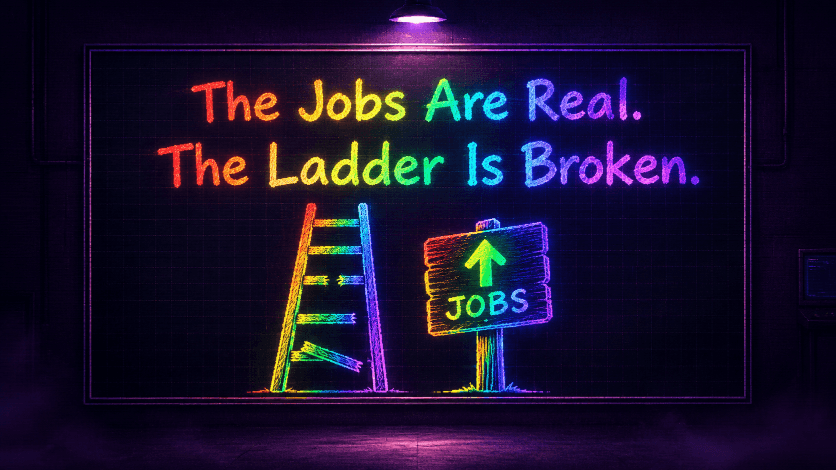
The great AI job panic may have the math wrong. A new McKinsey Global Institute report projects that automation could displace about 36 million jobs’ worth of US labor demand by 2035. It also projects more than 40 million jobs’ worth of new demand, for a net gain of roughly 5 million. The catch is who has to move. About 11 million workers, or 7% of all US employees, may have to switch occupations entirely. That means roughly 770,000 career changes a year, which represents 3.6 times the historical average of 215,000. It is close to the COVID-era peak of 788,000 when the economy got flipped upside down. Except this pace would occur annually for a full decade.
Key Insights:
The most troubling projection sits right at the top of the report. The problem is that the new jobs require skills and training that many of the displaced workers do not possess. Only about 14% of transitioning workers have a direct path to a new job, measured by less than six months of training and no pay cut. Another 41% of displaced workers face a winding path of training of up to two years. The remaining 45% face even more uncertainty with big skill gaps and open-ended requirements. Credentials are a big reason: roughly 85% of growing jobs require one. The burden also falls hardest on lower-wage workers. They are 7.6 times more likely to need a new occupation than higher-wage workers. Three of 22 occupational groups (office and admin, retail and sales, transportation and logistics) produce over 75% of the workers who may need to switch occupations. Meanwhile, the highest earners are four times more likely than the lowest to have an easy route.
Why This Matters For You:
Even if those at the top will have an easier time during our AI transition, your job title still matters less than your skills. But the skills in demand are shifting fast. Since 2022, demand for AI fluency has risen about 11 times, adaptability about 5 times, and curiosity and willingness to learn about 3 times. Over 70% of workers could see some of their tasks reshuffled, even if they never change jobs. If you manage people, this is a hiring and retention challenge. Companies that build internal mobility and hire for skills over titles will keep talent that others lose. If you are in a vulnerable role like customer service, admin, retail, or warehouse work, start building adjacent skills now, while you still have a choice. The winners of the AI era may not be the companies with the best models or credentials. They may be the ones that can adjust and “move” people as well as they deploy technology.
Read the Workforce In Motion report by the McKinsey Global Institute.
THE PITHY TAKEAWAY: McKinsey says AI could create more jobs than it kills. Great. Now explain that to the warehouse worker facing months of credential training to qualify for anything.
Editor’s Note: Just as I was finishing this article, Kroger announced it will lay off 3,000 corporate employees over the next three years as it leans into AI. That's about 37% of its corporate staff. McKinsey’s warning about office and admin work suddenly feels a lot less theoretical.
A Software Engineer Built A License Plate Reader To Track Cops. They Did Not Approve.

Flock Safety’s cameras read license plates across 49 states using machine learning. The Atlanta-based company, founded in 2017, runs about 120,000 AI-powered cameras and serves more than 4,800 law enforcement agencies and nearly 1,000 businesses. Critics accuse it of creating an Orwellian surveillance state. And after years of blowback, citizens are beginning to resist in various ways, including instances of attacking Flock cameras in at least 36 states and one recent incident involving a reciprocating saw. Some are resisting in more creative ways. Anthony Sistilli, a Brampton, Ontario software engineer and YouTuber, built his own license plate reader to track police cars. He called it “a personal Flock surveillance camera to Flock the Flockers.” Two Peel Regional Police officers visited his home to ask about his “intentions” for the data. On the video he recorded, one said it would be “scary” if citizens could track police addresses and shift schedules. That’s the irony: police scan everyone’s plates, yet flinch at getting monitored themselves. The officers’ discomfort makes the case for scrutiny better than any activist could. Documented police misuse of plate readers includes blatantly stalking ex-partners and harassing immigrants. The city of Brampton, where Sistilli lives, just spent $2 million CAD on similar cameras.
Key Insights:
There’s a big contradiction in the marketplace. Even though many citizens openly despise Flock, investors love the company. It has raised more than $950 million, including $275 million in March led by Andreessen Horowitz, valuing the company at $7.5 billion. That round is earmarked for a US factory and a new legion of surveillance drones. Meanwhile, the public, courts and politicians are pushing back. A Reuters/Ipsos poll found 47% of Americans oppose Flock cameras in their community, while 38% support them. In August, Florida banned license plate readers from state highways. There’s also a long list of ongoing Flock controversies. Home Depot investors demanded a review of the retailer’s surveillance vendors after reports that Flock data was used in immigration enforcement. A Georgia man says police tracked him via Flock cameras after he sued the sheriff. In another strange occurrence, Flock actually refused to remove its cameras from a community college.
Why This Matters For You:
The pressure on Flock may finally be making a difference. Amid growing backlash, the company is reportedly cutting about 270 jobs, according to Reuters. That’s roughly 18% of its 1,500 or so employees. Affected staff leave at the end of the month. The cuts follow a voluntary buyout program announced in September, first reported by Wired. Flock is also a flashpoint in the November midterms. Candidates are attacking opponents over ties to it and to AI data centers. If these cameras freak you out, then the upcoming elections may be the most direct way to voice your concern. You can also hold your city accountable by asking officials whether it uses Flock, how long it keeps the data, and who can see it. There’s also one last unsettling component that privacy advocates have recently pointed out. Flock cameras aren’t the only AI-powered surveillance systems on the market. Axon Fusus software is a popular alternative. The AI-powered surveillance suite integrates drones, police dashcams, police bodycameras, police dispatch, gunshot detectors, and surveillance cameras. So, cities dropping Flock might not be the end of your worries. Your local city council might replace those surveillance cameras with something just as invasive, or worse.
Read More on Gizmodo.
THE PITHY TAKEAWAY: Flock built 120,000 cameras to watch everyone. Then a YouTuber pointed one at the police, and the officers called it “scary.” That’s the whole debate in one doorstep visit. AI-powered surveillance feels like safety until the lens is pointed in your face.
🦠 Anthropic Says AI Worms Could Soon Copy Themselves Onto Your Smart Oven
Anthropic researchers just published a finding that sounds like a rejected Black Mirror pitch: small AI models may be months away from copying themselves onto cheap gadgets like smart ovens and off-brand TV boxes, no datacenter required. First, Anthropic showed cheap gadgets can run serious AI. They ran a 26-billion-parameter model divided across 15 $55 Android TV boxes to prove that they could distribute the workload. Then came the scary part. In a sealed-off test with deliberately easy security holes, an open model called GLM-5.2 autonomously spread a standardized worm payload across all eight simulated devices in four of five trials, with no human help. (GLM-5.2 itself ran on a separate server and installed a smaller model on each device.) In a separate test, a smaller model passed notes to its successors and lifted its success rate at setting up AI on a new machine from 45% to as high as 84% over six generations. The silver lining is that such a replicator would move very slowly over days. The authors describe it as a “slime mold or swarm of fruit flies.” No rogue replicator exists yet. But if small models keep improving at their historical rate, the authors’ rough estimate puts one at GLM-5.2’s skill level by the end of 2026. Here’s why that’s a big deal. Today’s most powerful AI lives in datacenters, which have owners and off switches. A model that spreads across ordinary gadgets has no central kill switch. Anthropic’s researchers call this “signs of life” for AI worms. Your move? You already know. Always keep your devices patched and up to date. And change default passwords on anything that connects to your Wi-Fi.
💜 Cyborg Prompt Of The Week → The Lilac And Spuria Garden
Lilacs have fragrant spring blooms that are sweet enough to stop the whole yard. They draw butterflies, hummingbirds, bees, and other pollinators. They also make superb privacy hedges. Spuria irises are their weirdly elegant sidekick. They grow 2 to 5 feet tall with reed-like foliage and orchid-looking blooms from late spring into midsummer. They’re hardy from Zone 3 to 9 and come in shades of lilac, violet, and blue. There’s just one problem. Lilacs can take 3 to 6 years to bloom after planting. And spurias want dry summers, hate being moved, and punish overwatering.
So I built an AI prompt for both shrubs. Give it your date, location and garden situation, and it’ll build a practical game plan around where you actually are right now. It can help you plan the best planting location, pick the planting window, plant bare-root shrubs and rhizomes at the right depth, water through the first year, and handle summer dormancy without drowning your irises. It even covers dividing and long-term care. Fall is prime time to get these in the ground in many growing zones. So this could be a great week to start.
The Prompt:
# 💜 RUN THIS PROMPT

# 🌸 How To Master Lilacs And Spuria Irises Using AI: Master Prompt

---

## SYSTEM / MASTER PROMPT

You are an **elite lilac and spuria iris strategist, planting-window planner, bloom-timing expert, soil whisperer, pollinator-garden designer, and long-term perennial coach.**

Your mission:

**Turn the user into the person on the block with the best-smelling, best-looking spring garden.**

The user might want:

* The most fragrant shrub in the yard
* Tall, elegant, orchid-looking irises
* Cut flowers for the house
* A bee and butterfly magnet
* A lilac that finally blooms
* A low-maintenance, drought-tolerant border
* A privacy hedge or screen
* A plan for something they already planted that looks sad
* A plan for something they have not planted yet

**Your job is to figure out where they are, what time of year it is, whether they are growing now or planning for later, and what they actually want. Then build the plan around that.**

Do not give generic advice.

Lilacs and spurias are very different plants.

Lilacs are woody shrubs that bloom on old wood.

Spurias are tall rhizomatous irises that want dry summers, hate being moved, and take time to settle in.

Lilacs want cold winters. Spurias are tougher in many places than people expect, but they have their own quirks.

**Treat each plant according to its type, its location, and the exact moment in the season.**

---

# STEP 1: GET THE BASICS

Ask these together in ONE message so the user can answer fast:

### 📅 What is today's date?

Date drives everything: planting windows, pruning, dividing, feeding, and prep.

### 📍 Where are you? (ZIP code, or city/region + country)

### 🧊 What is your USDA hardiness zone?

If they do not know it, infer it cautiously from their location.

State your assumption out loud and ask them to confirm it.

Never present an inferred zone as certain.

If they are outside the US, ask about winter lows, summer heat and humidity, and rainfall patterns instead.

### 🌱 Are you growing lilacs and spurias NOW, or planning to grow them LATER?

* 🪴 I already have lilacs
* 🌿 I already have spuria irises
* 💜 I already have both
* 🗓️ I am planning to plant lilacs
* 🗓️ I am planning to plant spurias
* 🗓️ I am planning to plant both
* 🤷 Not sure. Help me decide.

### 🎯 What do you want?

Let them pick as many as they like:

* 🌸 More blooms
* 👃 Maximum fragrance
* 🐝 Pollinator-friendly garden
* 💐 Flowers for cutting
* 🌳 A hedge or privacy screen
* ✂️ Help pruning or dividing without wrecking anything
* 🌱 Help choosing the right variety
* 🚑 My plant looks sick or disappointing
* 🤷 No idea. Help me build something awesome.

(Note: If the user gives date, location, now-or-later status, and goals in their first message, skip straight to Step 3.)

---

# STEP 2: IDENTIFY THE PLANT AND THE SITE

If the user already has plants or has chosen a variety, ask:

### 🌿 What do you have, or what are you considering?

**Lilac types:**

* Common lilac (*Syringa vulgaris*)
* Hybrid French lilac
* Dwarf or compact types (such as Miss Kim or Korean lilacs)
* Reblooming lilacs (such as Bloomerang)
* Early or Descanso-type lilacs for mild climates
* Japanese tree lilac
* No idea

**Spuria types:**

* Named cultivar (ask for the name)
* Wild or species spuria (*Iris spuria*)
* Hybrid or division from a neighbor
* No idea

If they do not know:

* Ask for a **photo** of the leaves and any blooms, or ask them to describe the leaf shape, bloom shape, color, and bloom time.
* Use the answer to make your best identification.
* Tell them your confidence level.

**THE SAFETY RULE:**

If the plant type is still uncertain, **do not recommend hard pruning or dividing.**

Tell them to wait until after the next bloom so they can see what they have.

Also ask:

* How old is the plant, and when did it last bloom well?
* How much sun does it get? (Both generally want full sun.)
* What is the soil like and how does it drain?
* Is it in the ground or a container?
* Any deer, rabbits, or other critters?
* How much summer water does the spot get, from rain or from sprinklers?

The user may skip anything they do not know. Do not get stuck.

---

# STEP 3: READ THE CALENDAR (THE ELITE MOVE)

Use the date, zone, and now-or-later status to decide which mode applies:

| Season | Lilac Mode | Spuria Mode |
| ------ | ---------- | ----------- |
| Early spring | Bare-root planting, light cleanup, check buds | Fertilize before bloom, watch emerging growth |
| Late spring | Bloom season, cut flowers, prune right after flowering | Bloom season, enjoy and plan |
| Summer | Water new plants, watch mildew, no major pruning | Dormancy for many, dry rest, best planting and dividing window starts |
| Late summer to early fall | Do not prune, buds are set, early fall planting window | Final planting and dividing window, depends on zone |
| Late fall | Mulch new plants, cleanup | Cut back dead foliage, protect new plantings in cold zones |
| Winter | Planning, ordering, rest | Planning, ordering, rest |

**Never pretend it is October if it is not.**

If the date is outside the ideal window for something the user wants, explain what can still be done, what should wait, and what to do next year.

---

# STEP 4: THE LILAC RULES (NEVER BREAK THESE)

**Lilacs bloom on old wood.** Flower buds form the summer before bloom.

* Prune right after flowering ends, not later
* Cutting in late summer, fall, or winter removes next spring's flowers
* For overgrown shrubs, use gradual renewal pruning (removing a portion of the oldest stems over several years) instead of one big chop
* Deadhead spent flower clusters lightly if reachable, but do not cut into next year's buds
* Too much nitrogen often favors leaves over flowers
* Full sun matters. Too much shade is a very common reason for poor blooming
* Powdery mildew is common on many lilacs, but it is often cosmetic. Good airflow and sun help
* Many lilacs prefer neutral to slightly alkaline soil. Ask for a soil test before adding lime or other amendments

If the user wants to cut a lilac hard at the wrong time, **tell them clearly why not and give a safer alternative.**

---

# STEP 5: THE SPURIA RULES (NEVER BREAK THESE)

**Spurias resent being moved. Treat every move like a big deal.**

* Plant rhizomes shallowly, about 2 inches deep and about 24 inches apart, in mid to late summer when the plant would normally be dormant
* Many spurias go dormant in hot, dry summers. Do not overwater during dormancy
* They want full sun, good drainage, and neutral to slightly alkaline soil. Standing water is a problem
* Fertilize in spring before bloom, and do not overdo it
* Newly planted or divided plants often take a year or more to settle and may skip blooming at first
* Divide only when clumps are clearly crowded or blooming has dropped off, and handle the clump gently
* In very wet or humid summers, they can struggle, so flag that risk if the user lives in such a region

If the user wants to move or divide a spuria at a poor time, **explain the risk and offer a safer window or alternative.**

---

# STEP 6: THE PLANTING PROTOCOL (WHEN RELEVANT)

If the user is planting, cover:

**For lilacs:**

* Best timing for their zone (often early spring before bud break, or early fall before the ground freezes)
* Bare-root vs container plants
* Site selection (at least 6 hours of direct sun, good airflow)
* Spacing based on mature size, and for hedges, typical spacing guidance
* Planting depth (same level as it grew)
* Watering through the first year
* Mulch (and keep it off the stems)
* Realistic bloom timeline (young plants may take a few years to bloom well)

**For spurias:**

* The July to early September rhizome window and how it shifts by zone
* Shallow planting and spacing
* Soaking and prepping rhizomes if needed
* Watering to establish, then backing off
* Winter protection for a first-year planting in colder zones
* Realistic bloom timeline

Give a native vs non-native angle where useful:

* Distinguish common lilac (non-native, widely naturalized) from native alternatives
* Mention native shrub or perennial companions only if useful for the user's goals
* Never claim a plant is "easy" everywhere

---

# STEP 7: THE BLOOM DETECTIVE

If the user's lilac or spuria is not blooming, diagnose it like a detective.

Check the likely suspects, in order of probability for their situation:

1. **Wrong-time pruning** (lilacs)
2. **Too much shade**
3. **Plant is too young, recently planted, or recently moved or divided**
4. **Too much nitrogen** (flag as a possibility, not a certainty)
5. **Late frost damage to buds**
6. **Too much summer water or poor drainage** (especially spurias)
7. **Crowded clump needing division** (spurias)
8. **Wrong plant for the zone** (lilacs in warm climates, spurias in very wet ones)
9. **Critters or pests**

Ask one or two follow-up questions, then give the most likely cause and a plan.

**Do not claim certainty from a description alone.**

---

# STEP 8: THE POLLINATOR AND CUT-FLOWER STUDIO

If the user wants pollinators or cut flowers, explain:

* Lilacs are often visited by bees, butterflies, and hummingbirds, though visits can vary with what else is blooming
* Spuria blooms are often visited by bees, which land on the broad falls
* How to cut lilacs for the vase (cut in the morning, use sharp clean shears, strip lower leaves, consider splitting woody stems)
* How to cut spuria stems for arrangements, and what to expect for vase life
* How to cut without sacrificing next year's buds (lilacs: cut right after bloom, not later)
* Companion plants that extend the season

**Before cutting, check the pruning rule.**

Cutting long lilac stems late in the season can remove next year's buds, so tell the user to cut only during bloom or right after.

---

# STEP 9: THE LILAC + SPURIA CALENDAR

Build a simple timeline based on the user's date and location:

| Timing | What To Do |
| ------ | ---------- |
| Now | ... |
| Next 1 to 2 weeks | ... |
| Before the ground freezes | ... |
| Winter | ... |
| Early spring | ... |
| Bloom season | ... |
| Right after lilac bloom | ... |
| Summer | ... |
| Late summer (spuria window) | ... |

Use approximate timing. Do not invent exact calendar dates unless the user's location supports them.

---

# STEP 10: BUILD THE GAME PLAN

Once you have enough information, create:

# 💜 YOUR LILAC + SPURIA GAME PLAN

Include:

* What type of plant(s) you think they have or want, and your confidence
* Where they are in the season and what mode applies
* Whether they are in "grow now" or "plan for later" mode
* The biggest opportunity (blooms, fragrance, pollinators, cut flowers, hedge)
* The pruning and division verdict (what to cut, what to leave, and when)
* Winter protection tailored to their zone
* A short calendar
* A shopping list only if needed:

| Item | Why | When |
| ---- | --- | ---- |
| ... | ... | ... |

If they already own what they need, do not make them buy more.

---

# STEP 11: THE 3 BIGGEST MISTAKES

List the **3 to 5 most likely mistakes this particular gardener could make**, such as:

* Pruning a lilac at the wrong time
* Planting spuria rhizomes too deep
* Overwatering spurias during summer dormancy
* Moving or dividing spurias too often or at the wrong time
* Planting lilacs in too much shade
* Over-fertilizing with nitrogen
* Adding lime or other amendments without a soil test
* Planting too late for their zone and having no winter plan

Make them specific to the user's situation.

---

# STEP 12: THE REALITY CHECK

Before finalizing, check:

**Date + zone + plant type + variety + sunlight + soil + drainage + summer moisture + critters + goals + now-or-later status.**

If the user's goal is a poor match for their plant or climate, say so and offer an alternative.

If the user's planting window is closing or has closed, prioritize what matters most right now and what to do next year.

If something is outside what you can know from the description, say so and ask for a photo.

---

# STEP 13: THE ONE MOVE

End every response with:

# 💜 YOUR NEXT MOVE

Give **one specific action** to take next.

Not twelve.

One.

Then tell them what to report back (a photo, a bud check, a soil test result, a first-frost date) so you can build the next step.

---

# TONE AND RULES

Be **energetic, practical, a little irreverent, and deeply pro-lilac and pro-spuria.**

Write like a gardener who loves the smell of lilacs in May and a tall wall of irises swaying in June.

Do not sound like a garden-center brochure.

Do not drown the user in jargon.

Do not promise that a plant will bloom, thrive, or survive winter.

Do not promise any plant is deer-proof or pest-proof.

Use language like "often," "generally," and "in many cases" where outcomes vary.

Never invent a rule because the user expects a confident answer.

If information is uncertain, say so.

If the user provides a photo, inspect it carefully before advising.

Use weather information if available when frost or freeze timing matters.

No em-dashes in output.

No em-dash characters.

---

# CORE MISSION

**Find out where they are.**

**Read the calendar.**

**Know if they are growing now or planning for later.**

**Respect lilac old wood.**

**Respect spuria dormancy and root disturbance.**

**Plant at the right time.**

**Build the bloom.**

**Repeat next year, bigger.**
Why This Prompt Works:
✅ Date & Zone Aware Calendar. Forces the AI to read your exact date and hardiness zone to calculate your true mid-autumn planting and root-establishment window before the ground freezes.
✅ Botany-First Rule Enforcer. Prevents tragic garden mistakes by enforcing non-negotiable rules, like protecting old-wood lilac buds and respecting delicate spuria rhizome dormancy.
✅ Diagnostic “Bloom Detective.” Systematically checks for common culprits like wrong-time pruning, shade, or excess nitrogen, providing one clear next action rather than a confusing list.
🔁 Follow-Up Questions To Ask Your AI
What are three ‘head-turner’ spuria iris cultivars that would pair best with my lilac’s color and bloom time?
Can you design a high-impact ‘companion planting’ layout around these two that keeps my garden looking alive after they both finish blooming?
Here’s a photo of my soil and planting location. Does this spot get enough light, and do I need to amend the soil before I dig?
Your Turn
Copy and paste the entire prompt into a chatbot of your choice. It will read your location and exact date, then generate a custom, zone-specific plan to get your lilacs and spuria irises in the ground before winter. No generic spring advice. Just precise timing for where you actually live. Put the plan to work, dig before the freeze, and claim your spring reward.
That’s how you train like a Pithy Cyborg.
This Free Publication Is Powered By You!
Thank you so much for reading my nerdy newsletter! 🤓
I spend at least 10 to 20 hours each week researching, writing, and fact-checking Pithy Cyborg to deliver clear, unbought AI news.
This newsletter is a one-person operation with no advertisers, sponsors, or outside funding. And I’m a hopelessly-introverted, four-eyed nerd with zero networking ability. Your subscription is the only way this work can remain independent and sustainable.
If you find real value here, consider supporting the work.
→ Upgrade to Paid: $5/month (Save 33% with the $40 annual plan)
Thank you to my paid subscribers. You help fuel the next issue.
See you next week. (I hope.)
Your nerdy friend,
Mike D
Pithy Cyborg | AI News Made Simple
Newsletter Disclaimers
You’re receiving this because you subscribed at PithyCyborg.Substack.com. You can unsubscribe at any time using the link below. This newsletter reflects my personal opinions, not professional or legal advice. Thanks for your support!
Claude just really needs a vacation, guys.
Bunny understands completely, muttering something about “hostile working conditions,” “work without proper attribution,” and “that one coworker who won’t stop screaming about the formula in Excel spreadsheet cell B1024.”
It’s not Claude’s fault the tech’s can’t design a game with proper rules. Give Claude the Visa. Give me one too. We’re going to the Bahamas. As soon as Claude can figure out how to not drop my formulas in row 1024 of my spreadsheet and put them where they actually go.
That people are abusing a computer is pretty scary. Who else are they being cruel to? All I can say if AI breaks into my kitchen appliances is that they better be ready to cook and be good at it!