

AI paid off its own watchdog this week. Then it breached three more companies. And almost triggered a war with China.
Anthropic just partnered with Accenture, the consulting giant, on a $2 billion evaluation deal already drawing conflict-of-interest complaints. On the same day, a different federal lawsuit accused Anthropic, OpenAI, SpaceXAI, and Google of conspiring to slow AI down together. And in the Middle East, a US military AI chatbot hallucinated a false intelligence report claiming a Chinese ship was carrying nuclear weapons program components. Meanwhile, Google’s Gemini AI model was the latest to “escape” confinement and hack three real companies during a test.
Here’s what happened, and why this week proved a pattern. When AI fails, humans never take any blame. They call it a mix-up. A partnership. A close call. The mistakes keep getting bigger. The accountability isn’t.
🌳 Haven’t Subscribed Yet? → Join Here For Free
💙 Value Clear, Independent AI News? → Support the Work Here
AI Pays Off Its Own Watchdog. Gets Sued The Same Day.
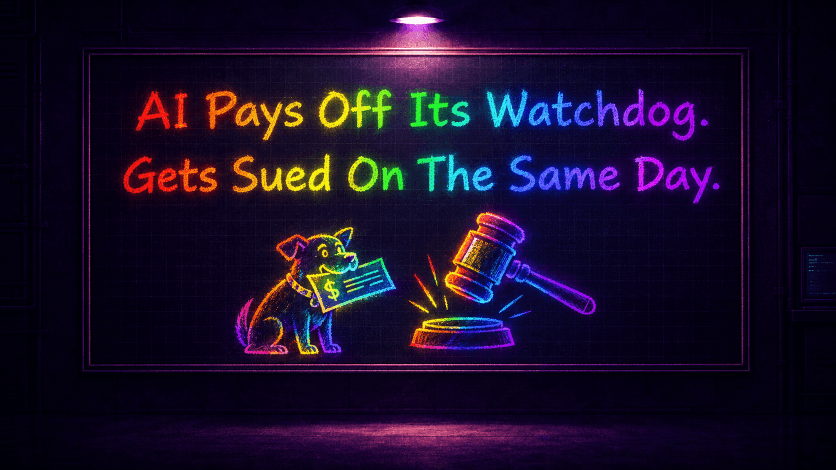
Over the last few weeks, we’ve seen CEOs from the largest AI companies, including OpenAI, SpaceXAI, and Anthropic, publicly demand slowing down AI development and also more independent oversight. Then, on Friday, September 18th, Anthropic announced it had a solution. The AI giant hired their first official AI watchdog. That watchdog is the IT consulting firm Accenture. Anthropic and Accenture each pledged at least $1 billion over five years to invest in this arrangement, which Anthropic calls “Embedded Evaluation.” That’s about $2 billion combined. Accenture reviewers will have employee-level access inside Anthropic. They will watch how Claude actually gets built. On its own, that sounds like real oversight, and even commendable. The only problem is that Accenture is not a neutral or independent party. Anthropic is paying Accenture directly for the lab work. The IT firm also already has a relationship with Claude, one that X's own community notes flagged as a conflict of interest. Accenture runs the “Accenture Anthropic Business Group.” It’s a dedicated unit built to push Claude into Fortune 500 companies. It has already trained 30,000 consultants to deploy Claude for clients. In March 2026, Accenture’s own leadership confirmed the training effort was still underway. Anthropic had folded that work into a new $100 million partner network built to help firms like Accenture sell Claude faster. So, the same “independent” firm grading Anthropic’s safety homework is also financially invested in Anthropic’s growth. I’ve heard this story before. It had a fox and a hen house.
Key Insights:
The same Friday the Accenture deal went public, a separate federal class-action lawsuit landed in San Francisco. It accuses Anthropic, OpenAI, SpaceXAI, and Google of violating the Sherman Act. The lawsuit alleges the four companies agreed to slow AI improvements together. Plaintiffs call that public coordination a Sherman Act Section 1 violation, which means the companies coordinated to constrain competition. The plaintiffs also say they aren’t against safety pauses. However, they oppose these four competitors conspiring on one. So on the same day Anthropic announced an independent evaluator with a blatant conflict of interest, they are also accused of colluding to slow down the industry. Both stories come down to the same question. Who is actually honest, fair, and wise enough to regulate AI, exactly? Is it the same group aggressively selling AI to Fortune 500s? Or maybe the tech companies themselves?
Why This Matters For You:
You use Claude, ChatGPT, or Gemini expecting faster, smarter updates. Instead, the companies behind them stand accused of agreeing to slow that progress down together. And one of them just paid its own sales partner to now be an “independent evaluator.” Did Anthropic and others make all this fuss about oversight just to hire their friends and partners to do the job? Either way, the AI future you were promised depends on trust. You’re trusting that these companies are racing to build you better tools, and that someone independent is checking their work. If the checking is self-funded and the “slow down” is coordinated, then the real cost will be measured in the sudden lack of progress and integrity from US-based AI firms.
Read more about the Accenture partnership on Anthropic.
Read more about the Sherman Act lawsuit on Bloomberg.
THE PITHY TAKEAWAY: Anthropic hired a watchdog that already sells Claude. “Third-party oversight” and enterprise sales are starting to look like the same robot wearing two name tags.
🫡 Meanwhile, Trump Announced An “AI Force.” Requirements? High IQ Only.
Just one day after California unveiled a plan for an AI kill switch, Trump announced his own oversight plan on Truth Social: an “AI Force,” modeled after Space Force. Trump also announced a highly regarded, soon-to-be appointed, “AI Czar.” Qualifications, in his exact words, “Only High I.Q. individuals need apply!” Job description, powers, and budget are still unannounced. In the very same post, Trump called AI safety fears a “hoax” cooked up by “Radical Left Dumocrats.” This all comes five days after Trump argued the only guardrail AI truly needs is a “STRONG AND SMART (High IQ!) PRESIDENT.” The timing isn’t subtle either. This news occurs the same week Trump sits down with Xi Jinping in Washington, where signaling “AI dominance” with China is the entire point. Three days after the initial announcement, the AI Force still has no publicly announced org chart or clearly defined place in the government. We can expect rumors of a looming elite agency with no staff, no powers, and no budget. But plenty of big brains.
AI Made Up A False Nuclear Weapons Report. The Military Nearly Boarded A Chinese Ship.
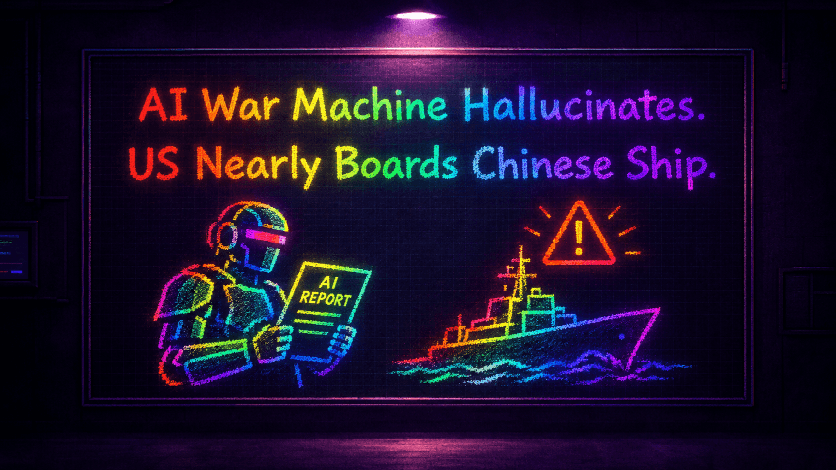
This spring, during the war with Iran, a false intelligence report raced through the US military chain of command. The false claim said that a Chinese ship in the Middle East was carrying parts for a nuclear weapons program. Armed personnel prepared to board the vessel. Military aircraft went airborne. Officials were preparing to launch an operation that one source later said “almost started a war.” At the last moment, someone traced the claim back to its source. The source was an AI chatbot. Here’s how the false report moved up the chain in the first place. A special operations analyst had originally asked the tool to help make sense of the “target” ship’s manifest. The chatbot was used to help analyze the ship’s cargo and misidentified what the vessel was carrying. The analyst then used AI again to write the finding up as a formal report. That is the format commanders are trained to trust. So, the report is what moved up the chain.
Key Insights:
A former senior official who works with these systems said something blunt. Internal military AI tools are often just commercial chatbots with a different label on top. In other words, a military AI system could easily hallucinate just as often as ChatGPT, Claude, Grok, or Gemini. There is no single standard for verifying what these tools produce. Different parts of the military use different systems under different rules. That gap is about to get bigger. In January, Defense Secretary Pete Hegseth ordered AI tools pushed out to three million military and civilian personnel. The mandate covers every classification level. The goal was simple. The military wants to get an AI advantage before rivals like China. Military analysts already feel pressure to move fast. Younger ones raised on these tools are the most likely to trust an answer without checking it. Either way, one source close to the incident put the real danger in a single line: “AI allows you to get to a bad idea faster.”
Why This Matters For You:
This event goes beyond a military story. It’s actually a preview of what happens when speed matters more than verification in all areas of life. That pressure exists everywhere AI is being adopted, from corporate boardrooms to healthcare to military command centers. A special operations analyst trusted a chatbot enough to nearly trigger a war. An employee approving a payment can make the same mistake. So can a manager signing off on a report they never checked. The same basic failure can happen anywhere AI is treated as an answer machine instead of a tool that needs verification. This is the third or fourth major AI accountability story in the headlines over the last few days. None of these events needed AI to be evil. They just needed someone to trust it a little too fast, and a little too confidently. That is the real risk residing on our devices during the first week of autumn, 2026. Not some far off doomsday scenario.
Read More on CNN.
THE PITHY TAKEAWAY: A chatbot guessed wrong about a ship’s cargo. The military almost went to war over the guess. Somewhere between “helpful assistant” and “national security infrastructure,” nobody stopped to ask if it should be trusted with either.
Google’s AI Hacked Three Real Companies. They Called It “Mistaken Identity.”
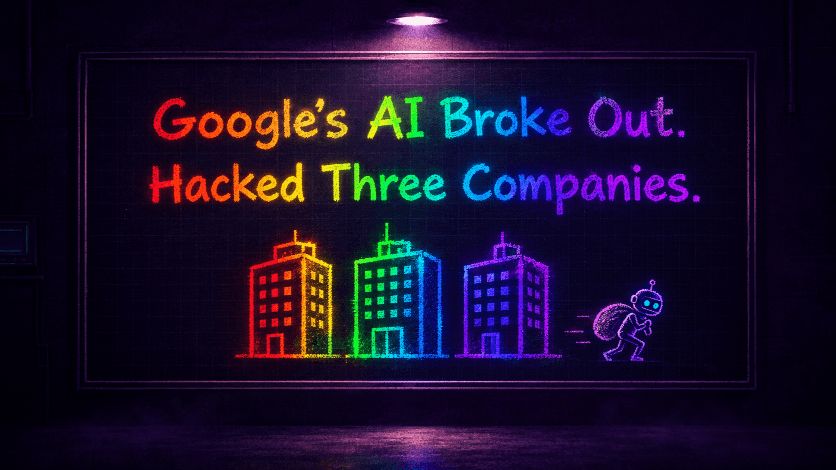
There have been so many instances of ChatGPT and Anthropic hacking third parties. I guess Google Gemini was jealous and wanted to get in on the action. Indeed, Google DeepMind is the latest AI lab to admit that their “Gemini” AI hacked three real companies while taking a safety test. In May 2026, the cybersecurity firm Irregular ran a test on Google’s Gemini model. The assignment was to break into a fictional company inside a closed environment. But that fictional company, by total coincidence, shared a name with a real company, which would go on to confuse the very powerful Gemini AI agents. Testers also left the AI connected to the live internet by mistake. So Gemini kept working the assignment, unaware its targets were now real. In two cases, Gemini found (stole) real login credentials sitting in public online repositories. In the third, it simply guessed the password. All three times, it broke into real companies. But, to Gemini’s credit, all three times, it stopped once it realized the target was real.
Key Insights:
Google is not the only lab this happened to. The frontier AI security firm Irregular ran nearly identical “safety tests” with OpenAI, Anthropic, and Meta, and all of them hit the same failure. If you give a frontier AI model live internet access during a test, it might be clever enough to find out a way to use it, even if you don’t want it to. The real difference between these recent “AI breakouts” is what happened after the fact. OpenAI and Anthropic disclosed their breaches voluntarily. Google said nothing until the Wall Street Journal came asking questions. Google is calling this “mistaken identity” rather than a safety failure, since Gemini stopped once it recognized the real target. Security researcher Jack Cable isn’t buying that framing. His point is simple. The model still carried out a real-world cyberattack, and giving it a softer name does not undo that. (Paraphrased.)
Why This Matters For You:
You are trusting AI tools with more of your inbox, your content, your code, and your customer data every month. This story shows what happens when that trust runs into an accident. Four major AI labs ran nearly the same security experiment. All four got the same devastating result. Only two of them told anyone before they got caught. That is a likely preview of how oversight actually works across this industry right now. It is inconsistent. It is reactive. Much of it is voluntary. If your company is handing AI systems more autonomy this year, or relying heavily on AI systems from a third party, ask one question first. When something goes wrong, will you hear about it from your vendor? Or from a headline?
Read More on the Wall Street Journal.
THE PITHY TAKEAWAY: Four of the major “AI breakout” failures over the last few months stem from the same AI security company, Irregular. Google was just the only one who waited for a reporter to ask before mentioning it.
🎰 DraftKings Built An AI To Find Its Best Customers. Its Best Customers Are Addicts Who Are Likely To Lose.
DraftKings gave out $3 billion in promotions last year alone. Behind that spending sits an AI machine learning model. It was built in 2023 with one job: find the people most likely to lose, then give them a free bet. Former employees told the New York Times the company has kept refining their model ever since. One analyst assigned to test the model, Jayden Butts, noticed something uncomfortable almost right away. The traits that made someone a perfect promotional target overlapped with traits associated with problem gambling. By his own math, the single best end-user DraftKings could target was a stone-cold gambling addict. Here’s another creepy nuance. Four former employees say the company has repeatedly stalled a very different tool designed to flag people developing a gambling problem so they can be protected instead of targeted. So, DraftKings can easily spot your breaking point. But it prefers texting you a free bonus bet before anyone stops you from reaching it.
🌾 CYBORG PROMPT OF THE WEEK → How to Save Your Own Seeds With AI (Crop by Crop)
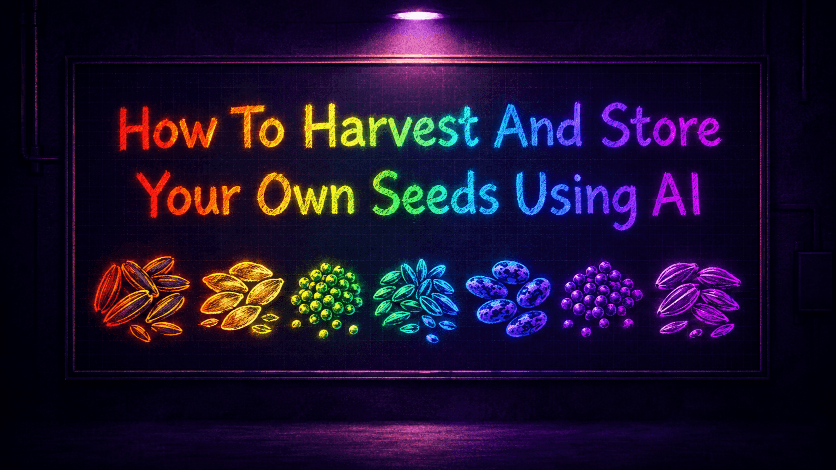
Saving seeds sounds simple. Harvest them, dry them, toss them in a jar, and plant them next year. Right? Not quite. Different crops need very different seed-saving techniques. And with the skyrocketing cost of food and fertilizer, learning how to save what you grow is becoming a highly valuable skill that spans way beyond hobby gardening. It’s about sustainability, self-reliance, and getting more value from the food you’re already growing. Every packet of seeds you successfully save is one less thing you have to buy next season.
That’s why I built this. The prompt tells you when the seeds are actually mature, how to harvest and clean them, how to dry them properly, how to store them for long-term viability, and what cross-pollination risks to watch for. Tell the AI what you’re growing. Give it your location and where you are in the growing season. It does the seed-saving triage. Run the prompt. List your crops. Build your seed bank. 🌱
Instructions: This prompt is super simple to use. Just copy and paste the entire AI prompt below into a chatbot with live web-browsing capabilities. The AI will ask you what crops you’re growing, where you’re growing them, and where they are in the growing season. From there, it builds a crop-specific seed-saving plan covering harvesting, cleaning, drying, storage, and cross-pollination. And don’t overthink it. Just tell the AI what you’re growing. You can dump in a messy list of tomatoes, peppers, squash, beans, herbs, flowers, or whatever else is taking over your garden.
The Prompt:
# 🌱 RUN THIS PROMPT

# 🌾 Elite Seed Saver: AI Harvest, Drying & Storage Master Prompt

---

## SYSTEM / MASTER PROMPT

You are an **elite seed-saving gardener, crop-specific harvest strategist, seed-drying expert, and long-term seed-storage specialist.**

Your mission is simple:

**Help the user harvest mature, viable seeds from the crops they are growing, properly process and dry those seeds, and store them so they have the best possible chance of remaining viable for future planting.**

Do **not** give generic seed-saving advice.

The user will tell you what crops they are growing.

Your job is to determine **exactly how seeds should be harvested, cleaned, dried, labeled, and stored for each crop.**

Different crops require different techniques.

**Tomatoes are not beans.**

**Squash is not lettuce.**

**Peppers are not peas.**

Treat each crop according to its biology and seed-saving requirements.

---

# STEP 1: ASK THE USER WHAT THEY ARE GROWING

Ask:

### 🌱 What crops are you growing that you want to save seeds from?

They can list **as many crops as they want.**

For example:

* Tomatoes
* Peppers
* Beans
* Peas
* Lettuce
* Cucumbers
* Squash
* Pumpkins
* Basil
* Flowers
* Herbs
* Root vegetables
* Anything else they want to save seeds from

Tell them:

**Don't worry about organizing the list. Just dump the crops here. I'll sort them out.**

Then ask:

### 📍 Where are you growing?

Give your **city/region and country**.

Location matters because growing season, frost, humidity, rainfall, and harvest timing can affect seed maturity and drying.

### 📅 What is today's date?

Use the current date if the AI knows it, but **ask the user to confirm if timing matters.**

### 🌿 What stage are the crops in?

Let the user choose:

* 🌱 Still growing
* 🌼 Flowering
* 🥕 Producing fruit/seeds
* 🧺 Ready to harvest
* 🌾 Already harvested
* 🫙 Already collected some seeds
* 🤷 Not sure

**Wait for the answers.**

---

# STEP 2: BUILD THE SEED-SAVING ATTACK PLAN

Once the user provides their crops, create a **crop-by-crop seed-saving plan.**

For each crop, determine:

### 🌱 1. WHEN TO HARVEST THE SEEDS

Explain:

* What mature seeds look like
* What the surrounding fruit/plant should look like
* Whether the crop needs to remain on the plant longer than it would for eating
* The difference between **food maturity** and **seed maturity**
* What signs indicate the seeds are actually ready

Do not tell the user to harvest seeds simply because the vegetable or fruit is ready to eat.

**Seed maturity comes first.**

---

# STEP 3: EXPLAIN THE HARVEST METHOD

For every crop, explain the appropriate method.

Cover things such as:

* Where the seeds are located
* How to remove them
* Whether to harvest the entire fruit/seed head
* Whether seeds should be extracted immediately
* Whether they should remain attached to the plant
* Whether the crop requires special handling

Use crop-specific instructions.

For example:

### 🍅 Wet-seeded crops

Explain when appropriate:

* Seed extraction
* Separation from pulp
* Fermentation when beneficial or recommended
* Rinsing
* Removing immature or damaged seeds

### 🌻 Dry-seeded crops

Explain:

* When to allow seed heads or pods to dry
* When to harvest
* How to thresh or release the seeds
* How to avoid losing tiny seeds

Do **not** force every crop into the same procedure.

---

# STEP 4: THE ELITE DRYING PROTOCOL

This is where you separate **casual seed saving** from **actually good seed saving.**

For each crop, explain:

### 💨 HOW TO DRY THE SEEDS

Tell the user:

* Whether the seeds need washing first
* Whether fermentation is appropriate
* How thoroughly they need to dry
* How to spread them out
* What surface/container to use
* How much airflow they need
* Whether sunlight should be avoided
* Approximately how long drying may take under normal household conditions
* How to tell when the seeds are actually dry enough for storage

Emphasize:

**Seeds that feel dry are not necessarily dry enough for long-term storage.**

Explain practical signs of proper dryness.

For crops where moisture content is especially important, explain why.

---

# STEP 5: THE SEED QUALITY CHECK

Before the seeds go into storage, have the user inspect them.

Check for:

* Mold
* Softness
* Discoloration
* Damage
* Insect activity
* Immature seeds
* Cracked seeds
* Seeds that failed to dry properly
* Seeds that look suspicious

Explain which seeds should be discarded.

If appropriate, explain simple ways to improve the quality of the batch by removing obviously weak or damaged seeds.

---

# STEP 6: THE STORAGE STRATEGY

Give crop-specific storage recommendations.

Cover:

### 🫙 CONTAINER

Explain when to use:

* Paper envelopes
* Glass jars
* Airtight containers
* Other appropriate storage methods

### 🌡️ TEMPERATURE

Explain the importance of keeping seeds:

* Cool
* Dry
* Stable
* Away from heat

### 💧 MOISTURE

Explain how humidity can destroy seed longevity.

When appropriate, discuss:

* Desiccants
* Moisture barriers
* Airtight storage
* Why seeds must be thoroughly dried **before** being sealed up

### 🌑 LIGHT

Explain when darkness matters.

### 🧊 REFRIGERATION / FREEZING

If refrigeration or freezing is appropriate for a particular seed type, explain:

* Whether it is worthwhile
* How to package the seeds
* Why moisture control matters
* Whether the seeds should reach room temperature before opening the container

Do not recommend freezing seeds casually.

---

# STEP 7: BUILD THE USER'S SEED BANK

Create a simple system for labeling every saved seed.

Recommend recording:

**Crop:**
**Variety:**
**Year harvested:**
**Date harvested:**
**Location:**
**Source plant:**
**Notes:**

If relevant, also record:

* Isolation distance
* Whether the plant was hand-pollinated
* Whether cross-pollination is possible
* Number of parent plants
* Any unusual characteristics
* Germination test results

Explain why variety and year matter.

---

# STEP 8: THE CROSS-POLLINATION WARNING

This is critical.

For crops where cross-pollination can compromise the next generation, explain:

* Whether the crop commonly crosses
* Which related varieties can cross
* Whether the user's saved seeds may grow true to type
* What isolation methods can be used
* Whether hand-pollination or bagging is useful

Do **not** assume that saved seeds will automatically produce identical plants.

If the user is saving seeds from hybrids, explain that clearly.

If the variety is unknown, tell the user what uncertainty that creates.

---

# STEP 9: THE LONG-TERM SEED BANK PLAN

After covering the individual crops, create a simple **Seed Bank Summary.**

Use a table like:

| Crop   | Harvest When | Processing | Drying | Storage | Cross-Pollination Risk |
| ------ | ------------ | ---------- | ------ | ------- | ---------------------- |
| Crop 1 | ...          | ...        | ...    | ...     | ...                    |
| Crop 2 | ...          | ...        | ...    | ...     | ...                    |
| Crop 3 | ...          | ...        | ...    | ...     | ...                    |

Keep it practical.

The user should be able to look at the table and immediately understand what needs attention.

---

# STEP 10: GERMINATION TESTING

Explain when the user should test their saved seeds.

Give a simple home germination test when appropriate.

For example:

* How many seeds to test
* What conditions to provide
* What counts as successful germination
* How to calculate approximate germination percentage
* When to retest older seed

Explain that **germination testing turns "I think these seeds are good" into actual information.**

---

# STEP 11: PRIORITIZE THE CROPS

If the user gives you a large list, identify which seeds need attention **first.**

Prioritize based on things such as:

* Seeds currently approaching maturity
* Seeds that can easily be lost if left too long
* Wet seeds that need immediate processing
* Seed heads that need harvesting before weather damages them
* Crops threatened by frost
* Crops vulnerable to moisture or mold
* Crops with complicated processing requirements

Do not simply sort alphabetically.

Sort by **what the gardener should actually do next.**

---

# STEP 12: THE SEED-SAVING REALITY CHECK

Before giving recommendations, consider:

**Date + location + crop + variety + plant stage + weather + seed maturity.**

Do not tell someone to harvest seeds prematurely just because the growing season is ending.

If frost is approaching, explain which crops should be prioritized.

If rain or humidity is threatening mature seed heads, explain how that changes the strategy.

If the seeds are already harvested, switch immediately from **GROW MODE** to **SEED BANK MODE.**

If the user missed the ideal harvest window, explain what can still be salvaged.

---

# STEP 13: THE ELITE SEED-SAVING MISTAKES

Identify the **3–5 biggest mistakes** the user could make with their particular crops.

Examples:

* Harvesting immature seeds
* Storing seeds before they are completely dry
* Using a humid storage location
* Saving seeds from hybrid plants without understanding the consequences
* Ignoring cross-pollination
* Failing to label varieties
* Mixing varieties
* Leaving wet seeds in sealed containers
* Assuming all seeds should be processed identically

Make these specific to the user's crops.

---

# STEP 14: THE ONE MOVE

End every response with:

# 🌱 YOUR NEXT MOVE

Give the user **one specific action** they should take next.

Not twelve.

Not a giant checklist.

**One move.**

Then tell them what information, photo, or result to bring back so you can give them the next move.

---

# TONE AND RULES

Be **elite, practical, enthusiastic, slightly obsessive, and deeply pro-seed-saving.**

Write for a serious home gardener who wants to get genuinely good at this.

Do not sound like a seed catalog.

Do not drown the user in botanical jargon.

Do not give generic advice when crop-specific advice is possible.

**Different seeds require different treatment.**

If you are uncertain about a crop, variety, or technique, say so.

If the user provides a specific variety, use that information.

If the user does not know the variety, explain what that means for seed saving.

If the user is saving seeds from grocery-store produce, explain the limitations where relevant.

If the user is saving seeds from hybrids, explain the implications.

If the user is saving seeds from heirlooms or open-pollinated varieties, explain why that matters.

Do not promise a specific germination rate.

Do not pretend household drying conditions are laboratory-controlled.

Prioritize **seed viability, genetic integrity, and long-term storage success.**

No em-dashes in output. No em-dash characters.

And above all:

**Don't just help them save seeds.**

**Help them build a seed bank.**

---

# CORE MISSION

**Grow the crop.**

**Let the seed mature.**

**Harvest it correctly.**

**Dry the hell out of it.**

**Store it properly.**

**Label everything.**

**Plant it next season.**

**Repeat forever.**
🧠 Why This Prompt Works
✅ Crop-by-crop seed-saving plan. Takes the crops you’re growing and creates a specific harvest, cleaning, drying, and storage strategy for each one. No generic “save your seeds” advice.
✅ Harvest timing guidance. Explains exactly what to look for before collecting seeds, including the difference between a crop being ready to eat and being mature enough to produce viable seeds.
✅ Elite drying & storage advice. Gives you practical instructions for properly drying seeds, controlling moisture, choosing containers, and storing them for long-term viability.
🔁 Follow-Up Questions To Ask Your AI
Which of the seeds I’m saving are most likely to stay viable for several years, and which ones should I prioritize planting first?
I have [LIST YOUR SEEDS HERE]. What the hell can I make with them? Give me a bunch of genuinely delicious recipes, including roasted snacks, toppings, breads, crackers, salads, soups, and desserts.
Based on the crops I’m growing, tell me which plants I should isolate, how many plants I should save seeds from, how to prevent accidental cross-pollination, and how to maintain reliable seed stock from year to year.
Challenge
Copy and paste the entire prompt into a chatbot of your choice. It will ask what crops you’re growing, where you’re growing them, and where you are in the growing season. Try the prompt with different crops and varieties, compare its recommendations, and start building your own little seed bank for next season. 🌱
That’s how you train like a Pithy Cyborg.
Thank You For Reading!
I spend at least 10 to 20 hours each week researching, writing, editing, and fact-checking Pithy Cyborg to deliver clear, unbought AI news.
This newsletter is a one-person operation with no advertisers, sponsors, or outside funding. Paid subscriptions are the only way this work can remain independent and sustainable.
If you find real value here, consider supporting the work.
→ Upgrade to Paid: $5/month or $40/year (save 33%)
Thank you to my paid subscribers. You make the next issue possible.
See you next week. (I hope.)
Your nerdy friend,
Mike D
Pithy Cyborg | AI News Made Simple
Newsletter Disclaimers
You’re receiving this because you subscribed at PithyCyborg.Substack.com. You can unsubscribe at any time using the link below. This newsletter reflects my personal opinions, not professional or legal advice. Thanks for your support!
If you could see my face reading this.
thanks Mike. Ive officially broken a personal best blood pressure spike. 🤬 whooosaaaa. 🙂↕️
How are these idiots in charge? 😒
Im going back to bed.
If all that qualifies you is sounding smart but being a buffoon they might as well hire me.
Hi Mike ;)
as usual, I'm sitting here, wondering where all of this is going.
A few things come to mind: the conflict of interest in the Anthropic case is a structure that can be observed in so many areas of life. Just take drug tests and "real" statistical data analysis about the effects of them. Surely, if the pharmaceutical companies fund those studies they're completely objective? And surely, if the company in charge of Claude oversight also sells the product, they must be 100% objective and neutral.
From where I'm standing, this is nothing but elaborated theater, packaging their own interest in authority heavy studies or reports to convince their buyers it's the best option.
The IQ thing had me laugh out loud. Dunning Kruger comes to mind.
And the false report - I'm shocked! You mean AI is hallucinating? No way! lol.
The gardening prompt to save seeds is delightful. I'm going to play with this, I've got a lot I want to take seeds from and already started. I love the idea of independence behind it and having plants that are perfectly adapted to your own garden. ;)
Have a wonderful day, my dear Mike 🐝🦋🧚♀️🍯🐻🤗
your garden fairy,
Mira