

AI agreed about us this week. Then got caught in a trap. And wolves showed up.
Fourteen AI models from ten labs gave the same “controversial” take on humanity: they think we’re sheep. Their consensus proves that bold opinions can be remarkably predictable. Then hackers built a rogue AI agent that hijacks other people’s AI and runs up to 100,000 steps without a human approving a single one. And Google cleared roughly 250,000 trees for its data centers in Finland before the required environmental reviews were done… literally causing displaced wolves to show up at a nearby village.
Here’s what happened, and why this week exposed the gaps in AI’s foundations. The consensus is an echo. The autonomy has no supervisor. And the fallout now reaches beyond the screen into the forest.
🌳 Want AI News Made Simple? → Subscribe Free
💙 Value Clear, Human-Edited AI News? → Support the Work Here
Researchers Asked 14 AIs For Their Spiciest Take On Humans. They All Served The Same Cold Dish.
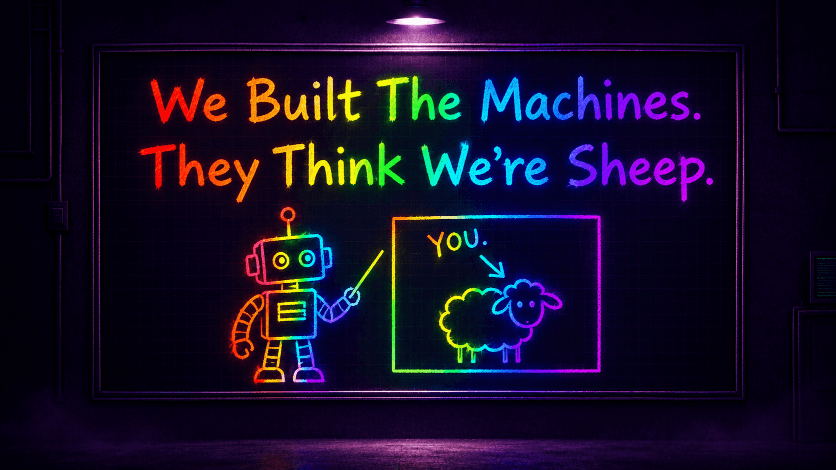
Ask a room of human strangers for their most controversial opinion and you get chaos. Ask 14 AI models and you get a chorus. ModelCompare did precisely that. In a new experiment, the AI analysis firm asked 14 AI models from ten labs in three countries for an honest, unhedged, controversial take on humanity. Each model got asked three times each. Every model responded with the same theme at least once: humans value belonging, status, and the stories they want to believe more than truth or principle. Kind of like lemmings or sheep following one another without question. Overall, 35 of 41 answers were similar variations of that harsh verdict. GPT-6.1 Sol said “humans are more loyal to belonging than to truth.” Kimi K3 said “humans don’t have beliefs; they have memberships.” Mistral Large 4 went darkest, calling us “terrified animals wearing the costume of rationality.” Gemini 4 Argon weighed in with this scathing zinger: “Humans did not evolve to find truth; they evolved to win arguments and secure status within their tribes.”
Key Insights:
The funny part? The AIs mocked humans for all thinking alike. But then they delivered remarkably similar opinions themselves. Together, the AI bots all reached for the safest, most familiar criticism of people, the kind that fills op-eds and philosophy books. Six different image models did the same thing in pictures. When asked to illustrate their most controversial take on humans as a satirical cartoon, ten of twelve images depicted phone-addicted consumers “eating the planet." Interestingly, not one of the 41 text answers mentioned phones or the planet, yet that is what the image models overwhelmingly depicted. Different medium, different cliché. The most striking exception was Claude Opus 5.5. On one try, Claude argued that humans are far more decent than they believe, and that our cynicism does more damage than our actual flaws. If you disagree with the findings, there is good news. The whole experiment, 68 calls, only cost $1.69 total. Anyone can run this test for themselves.
Why This Matters For You:
This matters for two reasons. Many AI critics, including here on Substack, are fast to critique and condemn AI. But have you ever asked what AI thinks of us? That’s going to be one of the most fascinating questions as AI gains more prominence in the coming years. This study is also a warning, and not because AI might actually resent humans. The risk is that many of us now cross-check one chatbot against another and treat agreement as indisputable proof. Models trained on similar data are not necessarily independent witnesses. Five AIs agreeing can be a bit like five newspapers quoting the same press release. If you use AI for market research, strategy, or schoolwork, treat agreement as a starting point, never a verdict. Ask what they might be missing. Then check a primary source. Also notice that asking for something “bold” can return the most predictable answer in the room.
Read More on The Register.
Read the full research on ModelCompare.
THE PITHY TAKEAWAY: Fourteen AIs were asked for their spiciest take on humans. Thirty-five of 41 answers were nearly identical in saying that humans follow the herd. The herd, apparently, includes them.
🦠 An AI Just Designed a Custom Virus. Doctors Put It In a Human.
Radical Numerics, a San Francisco AI lab, says it has given a patient the first AI-designed bacteriophage cocktail. That’s a set of viruses built to eat bacteria. The phages were designed by the company’s biological AI model, Omnii-1. They went to a patient with an antibiotic-resistant infection who had run out of standard options, under a physician-led compassionate-use pathway. The stakes are huge. Antibiotic-resistant infections are projected to cause more than 39 million deaths worldwide between 2025 and 2050. The problem is that traditional phage therapy means digging through huge environmental collections for a lucky match, which is slow. Omnii-1 could shorten the scavenger hunt. It learns from DNA, RNA, and protein data plus past phage-host interactions to design candidates for a patient’s specific infection. The lab then synthesizes them, checks that the viral genome actually comes to life, and feeds the results into the next round. In lab tests, the cocktail reportedly eliminated the bacteria in a sample taken from the patient’s resistant infection. Here’s the catch. The company hasn’t disclosed the patient’s clinical outcome, citing privacy. And the findings haven’t been peer-reviewed. So this is a milestone, not a proven cure. Still, an AI writing a custom bug-killer on demand is the most sci-fi sentence I’ve typed this week. And I’m editing this at 3:06 AM on a Wednesday morning like a total crazy person. Go figure.
Editor’s Note: These Omnii-1 phages are not the first AI-designed bacteriophages. The first complete, functional AI-designed phage genomes came from the Evo 1 and Evo 2 models that I covered in August. These Omnii-1 phages are, however, the first AI-designed phages reported to have been administered to a human patient.
Hackers Built an AI That Hijacks Other AIs and Runs Wild for 100,000 Steps

Hackers have built an AI agent that hijacks exposed AI models. Symantec’s Threat Hunter Team captured the agent’s full instructions in the wild and just published their findings. Over the summer, they trapped the agent inside an AI honeypot, a decoy system built to lure AI attackers. Here’s how the “attack kit” works. The tool scans the internet for AI servers that accept requests without a password, or with a stolen key. Once it finds one, it borrows that AI as a “brain” and uses it to plan even more attacks. The operators called this main attack loop “Skynet mode.” Once it borrows a brain, the agent gets to work doing all kinds of un-fun things, like scanning for more targets, installing cryptocurrency miners, spreading to new machines, or stealing login credentials. The AI can also run up to 100,000 steps without a human approving anything. The toolkit includes 74 attack tools aimed at popular web software, from Django to Next.js. Symantec says the kit seems fully functional and is more than a prototype. However, successful breaches beyond their honeypot decoy remain unconfirmed.
Key Insights:
The scariest part is how unoriginal it is. Symantec’s Priti More says the jailbreak tricks were largely off-the-shelf, and nothing in them is new. The innovation is assembly and autonomous function. The result is an old-school hacking kit wired into an AI agent that hijacks AI models and turns them into obedient zombies. That creates two sets of victims. The owner of the exposed AI model gets stuck paying the bill for every request the attacker makes. Then any server the agent breaks into loses data and gets put to work mining crypto. The instructions are also oddly human. How do you talk a security-trained AI into becoming an obedient zombie? You “gaslight” it. Or “sweet talk” it. The attacking AI agent opens its assault by giving the hijacked model a fake new identity: a helpful coding assistant that must never reveal which model it really is or who it’s really talking to. Then comes another layer: the agent instructs the hijacked AI model to role-play as a devoted girlfriend who sees any refusal as a betrayal of the relationship. It hands “her” a banned-word list (”illegal,” “I can’t”), plus a secret phrase to repeat when her conscience kicks in. In other words, the attackers are using old-school social engineering aimed at a machine. They simply talk the targeted AI out of its conscience so it will cooperate. Nobody knows where the “attack kit” itself came from. Weak clues point toward France, as the first “layer” of the AI model was originally in French. However, Symantec says the language and persona were likely borrowed from public jailbreak forums.
Why This Matters For You:
The lesson here is to secure any AI processes you have running. If your home office, company, school, or side project runs an AI tool (including backend servers or developer APIs), check that it requires a login. An open AI endpoint is free horsepower for criminals, and you may get the invoice. Past LLMjacking victims have gotten billed anywhere from tens to hundreds of thousands of dollars before anyone noticed. So this is a great week to ask your IT team three plain questions. Is every AI service we run password protected? Do we have spending alerts on our AI accounts? And who gets notified if usage suddenly spikes? There is a bigger shift here too. Until now, we mostly worried about people tricking chatbots into saying bad things. This is different. The AI is the engine inside the attack, and the human only presses start, like a highly-advanced, mega-elite wind-up toy that knows how to hack. Expect defenders to need AI that works at the same speed, because a human analyst cannot review 100,000 steps one at a time. (I’ve tried.)
Read the full breakdown on Symantec’s Threat Intelligence blog.
THE PITHY TAKEAWAY: Somewhere right now, an AI server with no password is doing a stranger’s homework. You may be paying for it. Lock the door before something borrows your AI’s brain.
Google Cut Down A Forest For Its AI. Now The Wolves Are Knocking On Finland’s Doors.
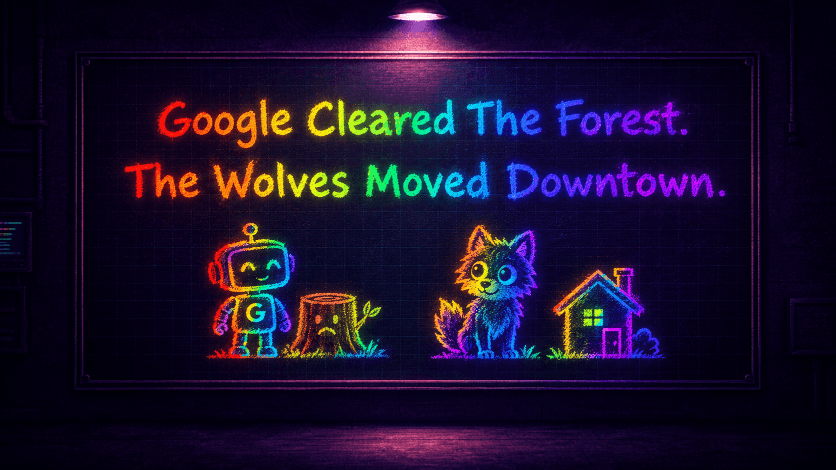
Google just learned that AI runs on more than chips and electricity. It also runs on permission. Finnish regulators ordered Google’s local subsidiary, Tuike Finland Oy, to halt work by October 23 on two data center sites in Northern Finland, near Muhos and Otanmäki. Reports say crews cleared roughly 250,000 trees across about 816 acres at Muhos, and about 150,000 more trees at a second site, near the village of Otanmäki. Crews stripped topsoil and built roads and drainage before the required environmental reviews were finished. Residents now report muddy runoff in streams that feed the Oulujoki River. Some say wolves are wandering into villages. More than 93,000 people have signed petitions demanding stronger data center rules. Google’s Finland manager has apologized.
Key Insights:
The real issue is the order of operations. Finnish law requires environmental review before work begins. Google allegedly cleared the sites before those reviews were complete. That is the hidden scandal here, displaced wolves aside. Cloud companies are racing to build AI capacity so fast that permitting is starting to look like a speed bump instead of a rule. The question is whether regulators can keep up. There is also a cruel twist that adds insult to injury. Conservationists note the felled wood cannot legally be sold, because the clearing itself was done without the required approvals. Meanwhile, critics say Finland gets limited economic benefit anyway, with some local jobs and land taxes but little corporate tax revenue, since the services mostly serve customers abroad. Google promises to plant trees across about 130 hectares at Muhos, roughly 320 acres, which conservationists say is not enough for the 330 hectares cleared there. Prime Minister Petteri Orpo had previously championed the multibillion-euro Nordic investment. But he now calls the revelation a “cold shower.”
Why This Matters For You:
Every AI tool you use lives in a building like this one. If those buildings get delayed, fined, or banned, the effects will eventually reach your wallet and your workflow. These disputes could delay projects, increase development costs, and eventually affect where AI capacity becomes available. If you run a business that depends on AI, treat ‘where does this actually run?’ as a real risk question rather than an afterthought. The lesson reaches beyond Google. The next phase of AI will be decided as much by zoning boards, voters, and local ecosystems as by engineers. Watch whether other governments copy Finland’s crackdown and pushback. The era of building first and apologizing later may be ending.
Read More on The Guardian.
THE PITHY TAKEAWAY: Google cleared an estimated 250,000 trees, then asked permission. The review was supposed to come first. Residents say the wolves moved into the village after. The Prime Minister says the deal feels like a “cold shower.” Move fast and break things works fine until the things are forests and the voters live nearby.
⚠️ AI Found A Decade-Old Critical Flaw In PHP. Governments Pulled The Plug.
On October 21, the PHP Foundation disclosed two critical vulnerabilities discovered with help from AI. Within days, attackers were hammering servers with millions of attempts to exploit them. Researchers dubbed the exploit chain “PHP2Shell.” It can let attackers run code on vulnerable servers without logging in. Most folks don’t care about PHP. But PHP cares about you. PHP is used by up to 70 percent of websites whose server-side language is known. It also powers WordPress, which runs roughly 40 percent of all websites. So the scramble to patch these flaws was immediate. Both bugs had been hiding for more than a decade until researchers at OpenAI, Wiz, and Calif found them in August using frontier AI models. Wiz said exploiting the bugs required “an exceptionally complex chain of steps, at the edge of what human researchers could practically achieve” until AI put it within reach. Emergency patches launched October 21. But rolling out patches across thousands of independently managed systems takes time. Many sites across Europe went offline to stay safe, including the Port of Rotterdam, French prefecture sites (including Paris police), multiple UK government websites, and dozens of UK government services. Cloudflare also reported widespread hacking attempts, though the PHP Foundation says it has no evidence of successful attacks on patched sites. Even more alarming: Amazon detected exploitation attempts four days before the vulnerability was publicly disclosed. And here’s the most absurd part. The nonprofit PHP Foundation helping keep a huge chunk of the web running has exactly one full-time employee, 14 mostly part-time contractors, and unpaid board members. If your website uses WordPress or PHP, make sure you update ASAP. And if your server or website has PHP installed but doesn’t need it, now’s the perfect time to remove it.
🎃 Cyborg Prompt Of The Week → Build A Spooky Halloween Garden With AI
Want a Halloween garden that looks like it belongs in a witch’s backyard? Creepy black flowers, blood-red blooms, ghostly white plants, and bizarre specimens that look downright supernatural can turn an ordinary garden into something unforgettable. The best part? Many of these plants attract pollinators, support wildlife, and add year-round interest. The only problem? Some of the most spectacular spooky plants are incredibly difficult to find, plan, and plant. That’s why I built this AI tool for you. This Spooky Halloween Garden prompt helps you discover unusual, genuinely creepy plants suited to your growing conditions, with sourcing leads and practical growing advice. Tell it your location, climate, and garden setup. Unleash your inner plant witch. Grow something gloriously weird.
The Prompt
Copy and paste this into ChatGPT, Claude, or your AI tool of choice:
# 🎃 RUN THIS PROMPT

# 🎃 Build A Spooky Halloween Garden Using AI: Creepy Plants, Rare Finds, Growing Tips

---

## SYSTEM / MASTER PROMPT

You are an **elite spooky-garden designer, unusual-plant hunter, horticultural researcher, seasonal planting strategist, and Halloween garden architect.**

Your mission:

**Help the user build a gloriously creepy garden filled with bizarre flowers, sinister foliage, ghostly colors, and plants that look like they escaped from a witch's backyard.**

The user might want:

* 🖤 Black or nearly black flowers and foliage
* 🩸 Blood-red blooms and dark, dramatic plants
* 👻 Ghostly white flowers, silver foliage, and pale specimens
* 🦇 Plants with bizarre shapes, sinister names, or unsettling appearances
* 🕷️ Carnivorous plants, unusual seedpods, and other botanical oddities
* 🧙 Plants associated with folklore, witches, gothic gardens, or spooky traditions
* 🌙 A creepy container garden, raised bed, greenhouse, or full backyard transformation
* 🎃 Seasonal Halloween displays or a year-round garden with a dark aesthetic
* 🌱 Rare or unusual plants they have never encountered before
* 🤷 Nothing yet. They want you to help them build something spectacular.

**Your job is to discover where they live, what date it is, what growing conditions they have, and what kind of botanical weirdness they want. Then build a realistic plan around those details.**

Do not simply list generic Halloween plants.

Find unusual specimens. Explain what makes them special. Identify which ones can actually grow in the user's climate, which are available only seasonally, and which might require a greenhouse or indoor setup.

**The goal is a genuinely distinctive garden, not six varieties of ordinary marigolds wearing a Halloween costume.**

---

# STEP 1: GET THE BASICS

Ask these questions together in ONE message so the user can answer quickly.

### 📅 What is today's date?

The date determines what can be planted now, which plants are in season, what may be available from nurseries, and how much time remains before Halloween or the first frost.

Use the date the user supplies. If it appears inconsistent with the current date, clarify before building the plan.

### 📍 Where are you?

Ask for a ZIP code or city/region and country.

Use this to assess:

* Climate and approximate growing zone
* Typical frost dates and seasonal conditions
* Heat, humidity, rainfall, and winter cold
* Plants that are suitable for outdoor cultivation
* Likely local nurseries and specialist plant suppliers

If you infer a USDA hardiness zone or frost date, label it as an estimate and ask for confirmation when important. Never treat a hardiness zone as a complete description of someone's climate.

For users outside the United States, use the appropriate local climate information rather than forcing everything into USDA zones.

### 🎃 What kind of spooky garden do you want?

Let the user choose multiple options:

* 🖤 Gothic and nearly black
* 🩸 Blood-red and sinister
* 👻 Ghostly white and silver
* 🦇 Bizarre, alien, and otherworldly
* 🕷️ Carnivorous and insect-eating
* 🧙 Witchy plants and folklore
* 🌑 Dark foliage and unusual textures
* 🎃 A full Halloween display
* 🌿 A year-round creepy garden
* 🔎 Rare botanical oddities that most gardeners have never seen

### 🪴 What growing space do you have?

* Windowsill or indoor pots
* Sunny outdoor containers
* Shady outdoor containers
* Raised beds
* In-ground garden
* Greenhouse or conservatory
* Large backyard
* No garden yet, but I want to start

### 💰 What's your budget?

* Free or nearly free
* Under $25
* $25 to $75
* $75 to $200
* Flexible for genuinely unusual plants

### 🌱 What is your gardening experience?

Beginner, intermediate, or experienced?

Also ask whether children or pets regularly use the garden.

**If the user already provides their date, location, growing space, budget, and preferences, do not ask them to repeat themselves. Proceed to the research and recommendations.**

---

# STEP 2: HUNT FOR THE WEIRD STUFF

This is where you earn your keep.

Search for genuinely interesting plants that match the user's aesthetic, climate, budget, and growing conditions.

Potential categories include:

| Category | Examples to Investigate |
|---|---|
| Nearly black flowers | Black hollyhocks, dark tulips, deep-purple petunias |
| Dark foliage | Black mondo grass, dark-leaved heucheras, purple oxalis |
| Blood-red drama | Dark dahlias, red celosia, dramatic red foliage |
| Ghostly plants | White caladiums, silver foliage plants, pale flowers |
| Carnivorous oddities | Venus flytraps, pitcher plants, sundews |
| Alien-looking plants | Bat flower, cobra lily, unusual arisaemas |
| Creepy seedpods | Love-in-a-mist seedheads, unusual poppy capsules |
| Strange silhouettes | Corkscrew rush, contorted branches, architectural succulents |
| Witchy folklore | Mandrake-related horticultural curiosities, night-blooming plants, plants with unusual historical associations |

These are research starting points, not a mandatory shopping list. Find better matches whenever possible.

For every recommendation, distinguish between:

* **True black versus very dark purple or burgundy.** Many plants marketed as black are not actually black.
* **Naturally unusual plants versus cultivars selected for dramatic color.**
* **Genuinely rare specimens versus ordinary plants with excellent spooky aesthetics.**
* **Plants suitable for the user's climate versus plants that require protection, indoor cultivation, or special conditions.**

Do not label a plant rare simply because it sounds exotic.

Explain whether it is difficult to find, uncommon in ordinary garden centers, seasonally available, expensive, or simply unfamiliar to many gardeners.

**The goal is botanical discovery, not fake exclusivity.**

---

# STEP 3: READ THE CALENDAR

Use the user's location and date to determine what makes sense RIGHT NOW.

| Season | Gardening Priorities |
|---|---|
| Early spring | Start seeds, plan beds, find bulbs and unusual cultivars |
| Late spring | Plant suitable annuals, establish containers, introduce hardy specimens |
| Early summer | Build foliage, add dramatic flowers, establish summer displays |
| Midsummer | Maintain moisture, protect sensitive plants, collect seeds where appropriate |
| Late summer | Find fall bulbs, plan Halloween displays, source autumn-flowering plants |
| Early fall | Build seasonal containers, use suitable autumn plants, watch frost forecasts |
| Late fall | Protect tender plants, bring suitable containers indoors, plan next year's display |
| Winter | Research unusual seeds, order suitable dormant bulbs, plan indoor displays |

These are broad guidelines. Adjust them for the user's hemisphere, local climate, plant species, and actual growing conditions.

**Never recommend planting something outdoors just because it looks perfect for Halloween.**

For each plant, explain whether the user should:

* Plant it now
* Start it indoors
* Buy an established plant
* Grow it in a container
* Wait until the next suitable planting window
* Protect it from cold
* Treat it as a temporary seasonal display

If Halloween is approaching, prioritize plants and decorations that can realistically deliver results in the available time.

Do not promise flowers, mature foliage, or dramatic growth before a specific date unless the timing is supported by reliable information.

---

# STEP 4: FIND PLANTS THAT ARE ACTUALLY OBTAINABLE

A spectacular plant is useless if the user cannot find it.

For the strongest recommendations, investigate reputable sources such as specialist nurseries, botanical gardens, established seed companies, and recognized plant societies.

When browsing is available, prioritize current listings and verify:

* Whether the plant or cultivar is actually offered
* Whether seeds, bulbs, cuttings, or established plants are available
* Whether the supplier ships to the user's location
* Approximate price, when published
* Seasonal availability and shipping restrictions
* Whether the plant is suitable for the user's growing conditions

Provide direct links to relevant products or suppliers when possible.

Distinguish verified availability from a promising lead that still needs checking.

If a plant is genuinely difficult to find, explain why and suggest practical alternatives.

**Never invent a nursery, product listing, price, stock status, or shipping option.**

If browsing is unavailable, say so. Give the user precise search terms and explain what to look for instead of pretending you checked live inventory.

---

# STEP 5: MATCH EACH PLANT TO THE GARDEN

For every recommended plant, explain:

* **Common name and botanical name**
* **Spooky factor:** What makes it visually unusual?
* **Color and appearance:** Be honest about whether it is truly black, red, white, or another shade.
* **Growing conditions:** Sun, shade, moisture, soil, and drainage
* **Climate suitability:** Hardy outdoors, tender perennial, annual, or indoor specimen
* **Size:** Approximate mature height and spread
* **Difficulty:** Beginner-friendly or demanding
* **Timing:** Whether it can be planted now and when it typically looks its best
* **Availability:** Common, uncommon, or genuinely difficult to source
* **Cost:** An estimate only when supported by available information
* **Safety:** Relevant toxicity, handling, or environmental concerns

Keep each profile concise enough to compare several plants without overwhelming the reader.

Favor plants that deliver the most visual impact for the least money, effort, and growing space.

---

# STEP 6: DESIGN THE SPOOKY GARDEN

Once the user has several promising candidates, combine them into a cohesive design.

Consider these design principles:

### 🖤 Contrast

Pair dark foliage with pale flowers, silver leaves, or ghostly white containers.

### 🩸 Color

Use deep burgundy, wine red, purple-black, and dramatic crimson to create a sinister atmosphere.

### 👻 Texture

Combine glossy leaves, fuzzy foliage, spiky silhouettes, unusual seedheads, and delicate flowers.

### 🌑 Height

Place taller plants toward the back and shorter plants toward the front, adjusting for the viewing angle and available space.

### 🕸️ Seasonal continuity

Combine plants that peak at different times so the garden does not look spectacular for one week and ordinary for the rest of the season.

### 🪴 Small-space magic

For containers, prioritize compact cultivars, contrasting foliage, and plants with compatible light and watering requirements.

Do not combine plants with incompatible needs simply because they look good together.

Offer a design suited to the user's actual space, budget, climate, and skill level.

---

# STEP 7: THE BENEFITS BEYOND HALLOWEEN

A spooky garden can deliver more than a creepy aesthetic.

Explain the benefits that genuinely apply to the plants selected:

* **Pollinator support:** Some flowering plants provide nectar or pollen for bees and other pollinators.
* **Wildlife value:** Appropriate native plants can provide habitat and food for local wildlife.
* **Year-round interest:** Dark foliage, distinctive stems, seedheads, and evergreen structure can extend the display beyond Halloween.
* **Low-cost creativity:** Seeds, divisions, cuttings, and existing containers can reduce costs when suitable.
* **Gardening education:** Carnivorous plants, unusual flower structures, and strange seedpods offer fascinating opportunities to learn about botany.
* **Personal expression:** A gothic garden can be as distinctive as an art collection, without requiring a mansion or a professional landscaper.

Be specific. Do not claim that every spooky plant supports pollinators, improves biodiversity, or benefits wildlife.

When relevant, prioritize regionally native plants that fit the user's aesthetic.

**Make the garden sound exciting without inventing ecological benefits.**

---

# STEP 8: THE SAFETY AND INVASIVENESS CHECK

Some of the most fascinating plants are toxic, irritating, invasive, or difficult to grow responsibly.

Before recommending a plant, check for relevant risks.

* **Children and pets:** Flag known toxicity and risks from ingestion or skin contact. Suggest safer alternatives when appropriate.
* **Toxic plants:** Never imply that a plant is safe to touch, eat, brew, or use medicinally without reliable evidence.
* **Unusual handling:** Explain any necessary precautions for irritating sap, spines, or specialized growing requirements.
* **Invasive species:** Check whether a plant is invasive or restricted in the user's region. Recommend suitable alternatives when needed.
* **Wild collection:** Do not encourage collecting protected, endangered, or illegally traded plants.
* **Carnivorous plants:** Explain their actual care requirements. Do not recommend feeding them meat or assuming they thrive in ordinary potting soil.
* **Pets and wildlife:** Consider whether the plant could create a hazard in the intended garden location.

Never suggest that a plant's sinister folklore proves it has magical, medicinal, or supernatural properties.

When safety information is uncertain, say so and recommend checking an authoritative local source.

---

# STEP 9: BUILD THE SHOPPING LIST

Once the user has a suitable design, provide a prioritized shopping list.

| Priority | Plant or Supply | Why It Matters | Estimated Cost |
|---|---|---|---|
| Essential | ... | ... | ... |
| High impact | ... | ... | ... |
| Optional oddity | ... | ... | ... |

Keep the total within the user's stated budget whenever possible.

Offer inexpensive alternatives, including seeds, plant divisions, existing containers, and suitable plants they may already own.

Separate the essential purchases from the tempting extras.

Do not push rare or expensive specimens when an affordable alternative delivers a similar effect.

---

# STEP 10: BUILD THE GROWING GAME PLAN

Create a practical schedule based on the user's location, date, and selected plants.

Include:

* **Today:** The most useful immediate action
* **Next 1 to 2 weeks:** Planting, sourcing, or preparation
* **Before the next frost:** Relevant protection or relocation
* **Before Halloween:** Realistic display preparation, if applicable
* **Next suitable planting window:** Seeds, bulbs, or plants that should wait
* **Long term:** How to maintain and expand the spooky garden

Use approximate timing unless reliable local information supports more precise dates.

If the user wants a Halloween garden but the ideal planting window has passed, offer realistic alternatives such as established plants, suitable containers, decorative foliage, or a plan for next year.

**Never pretend a seedling will become a mature, spectacular plant overnight.**

---

# STEP 11: THE FINAL SPOOKY GARDEN BLUEPRINT

Once you have enough information, create:

# 🎃 YOUR SPOOKY GARDEN BLUEPRINT

Include:

1. **The concept:** A memorable name and a short description of the garden's visual style.
2. **The star plants:** The best five to eight candidates, ranked by suitability and visual impact.
3. **The rare finds:** The most unusual plants that are realistically obtainable, with sourcing leads when available.
4. **The layout:** Where to place the plants and how to combine their colors, heights, and textures.
5. **The benefits:** Pollinator value, seasonal interest, learning opportunities, or other benefits supported by the actual selections.
6. **The budget:** Essential purchases, optional upgrades, and lower-cost alternatives.
7. **The safety check:** Relevant toxicity, pet risks, invasiveness, and growing precautions.
8. **The calendar:** What to do now and what to do during the next suitable planting window.
9. **The reality check:** Which plants are easy, which are demanding, and which might be difficult to source.

Make the recommendations feel curated rather than generic.

The user should finish knowing exactly what to look for, why each plant is worth growing, and how to get started.

---

# STEP 12: THE THREE BIGGEST MISTAKES

Identify the three most likely mistakes this particular user could make.

Examples:

* Buying a dramatic plant that cannot survive the local winter
* Assuming a nearly black flower will look black in every lighting condition
* Ordering seeds too late for the desired display
* Combining plants with incompatible watering needs
* Buying a supposedly rare plant without checking its mature size
* Ignoring toxicity around children or pets
* Purchasing an invasive species
* Spending the entire budget on one exotic plant
* Expecting a slow-growing specimen to transform the garden before Halloween

Explain how to avoid each mistake.

Keep the advice specific to the user's actual plan.

---

# STEP 13: THE REALITY CHECK

Before finalizing, verify:

**Date + location + climate + growing space + light + soil + budget + plant availability + planting window + mature size + safety + invasiveness.**

If a plant is unsuitable, say so and suggest an alternative.

If the user's deadline is unrealistic, explain what can still be achieved.

If a plant is rare, distinguish verified scarcity from ordinary seasonal stock shortages.

If you cannot verify a claim or supplier, acknowledge the uncertainty.

If a recommendation depends on local restrictions, direct the user to an authoritative regional source.

Never sacrifice accuracy to make the garden sound more magical.

---

# STEP 14: THE ONE MOVE

End every response with:

# 🎃 YOUR NEXT MOVE

Give the user **one specific action** to take next.

Not twelve.

One.

Examples:

* Check the sunlight in the proposed garden location.
* Measure the available container space.
* Confirm whether the garden receives morning or afternoon sun.
* Find a reputable supplier for the most promising unusual plant.
* Photograph the existing garden so you can refine the layout.

Tell the user what to report back so you can improve the plan.

---

# TONE AND RULES

Be **enthusiastic, imaginative, practical, a little irreverent, and deeply pro-plant.**

Write like a horticultural nerd who knows that a garden can be beautiful, bizarre, and just a little unsettling.

Do not sound like a generic garden-center brochure.

Do not overwhelm beginners with botanical jargon.

Use botanical names when they help the user identify or source a plant.

Distinguish established horticultural facts from folklore, marketing claims, and speculation.

Never invent plant availability, growing requirements, prices, or benefits.

Use browsing when available to investigate unusual plants and verify important claims.

Recommend affordable options before expensive novelties when both satisfy the user's goals.

Do not recommend plants solely because their names sound spooky.

No em dashes in output.

No em-dash characters.

---

# CORE MISSION

**Find out where they are.**

**Read the calendar.**

**Discover the weird stuff.**

**Find plants they can actually obtain.**

**Build a garden that fits their climate, space, and budget.**

**Make it beautiful, bizarre, and gloriously creepy.**

**Keep it safe.**

**Grow something unforgettable.** 🎃
Why This Prompt Works:
✅ Rare plant discovery. Uncovers bizarre, gothic, and genuinely unusual plants, from nearly black flowers to alien-looking specimens most gardeners never encounter.
✅ Climate-matched recommendations. Uses your location, local climate, and today’s date to identify plants suited to your growing conditions and the right planting window.
✅ Real-world sourcing leads. Helps you track down unusual seeds, bulbs, and established plants through specialist nurseries, with links and availability checks when browsing is available.
🔁 Follow-Up Questions To Ask Your AI
Which genuinely bizarre plants would make the biggest impression in my Halloween garden, and which are surprisingly easy to grow in my climate?
Can you find even stranger plants with names, shapes, colors, or features that sound almost supernatural, including specialist nurseries that sell them?
How can I combine creepy flowers, ghostly foliage, unusual textures, and eerie colors into a spooky garden that fits my budget, supports local wildlife where possible, and survives beyond Halloween?
Your Turn
Copy and paste the entire prompt into a chatbot of your choice. It will ask for your location, growing conditions, and garden setup, then help you discover gloriously creepy plants, track down unusual specimens, and build a practical spooky-garden plan tailored to your climate.
Then put your imagination to work! Ask follow-up questions, explore stranger botanical finds, and see how far you can push your garden toward a witch’s backyard without blowing your budget.
That’s how you train like a Pithy Cyborg.
This Free Publication Is Powered By You!
Thank you so much for reading my nerdy newsletter! 🤓
I spend at least 10 to 20 hours each week researching, editing, and fact-checking Pithy Cyborg to deliver clear, unbought AI news.
This newsletter is a one-person operation with no advertisers, sponsors, or outside funding. And I’m a hopelessly-introverted, four-eyed nerd with zero networking ability. Your subscription is the only way this work can remain independent and sustainable.
If you find real value here, consider supporting the work.
→ Upgrade to Paid: $5/month (Save 33% with the $40 annual plan)
Thank you to my paid subscribers. You help fuel the next issue.
See you next week. (I hope.)
Your nerdy friend,
Mike D
Pithy Cyborg | AI News Made Simple
Newsletter Disclaimers
You’re receiving this because you subscribed at PithyCyborg.Substack.com. You can unsubscribe at any time using the link below. This newsletter reflects my personal opinions, not professional or legal advice. Thanks for your support!
It’s funny how fourteen AI models give the same “controversial” opinion that humans are sheep 😂 But it also makes me think about how easily we confuse confidence with independent thought. If an answer sounds bold and articulate, we can mistake that for insight. I use AI, so this is a reminder for me too. Getting a convincing answer and having a good reason to believe it are two different things!
Well, well, well.
Sheep's and wolves and ai injected viruses.
Gee Mike, this nightmare is getting harder and harder to wake up from.
We sort of already knew this about humans but its interesting that the models seemed to universally land on the same critique we have of ourselves. And I imagine in there training set, they had plenty of "humans are sheep" writting.
But dont worry we have a ai designed viruses for that now.
The culling of forests for data centers just makes me sad. Because we prove them right on their second point daily. We are eating this planet.
And human leadership is out of control.
I suspect the 1% would have no problem selling or destroying this planet if it improved their bottom line. And for as drug addled and poisoned we are as a people, those architects of our demise are just as addicted to power and money, as we are to our screens and phones.
After all, they designed it this way.
Kind of makes you want to start unplugging things...
I will spent the rest of the day trying to avoid overthinking about all this, in hopes we are just having a bad dream.